If you feel like your body has changed overnight during menopause, you’re not imagining it.
Many women in their 40s and 50s notice:
- weight gain around the middle
- lower energy levels
- poor sleep
- reduced motivation
- slower recovery
- muscle loss despite exercising
At Keep Fit with Michelle, this is one of the most common frustrations I hear from women starting or returning to fitness.
The good news is that menopause does not mean you’re doomed to gain weight or lose confidence. But it does mean your approach to fitness may need to change.
Why Menopause Changes Your Body
During perimenopause and menopause, hormone levels — especially oestrogen — begin to fluctuate and decline.
This can affect:
- how your body stores fat
- muscle maintenance
- sleep quality
- stress response
- energy levels
- recovery from exercise
Many women try to respond by:
- eating less
- doing more cardio
- overtraining
- cutting carbs completely
Unfortunately, these approaches often make things worse.
Why Endless Cardio Stops Working
One of the biggest mistakes I see is women spending hours doing cardio while avoiding strength training.
While cardio has benefits for heart health and fitness, too much can:
- increase fatigue
- worsen recovery
- contribute to muscle loss
- increase hunger
- raise stress levels
And during menopause, preserving muscle becomes incredibly important.
Muscle helps:
- support metabolism
- improve body composition
- protect bone health
- improve strength and mobility
- increase confidence
This is why strength training is one of the most effective tools for midlife fitness.
Strength Training During Menopause
You do not need to become a bodybuilder to benefit from lifting weights.
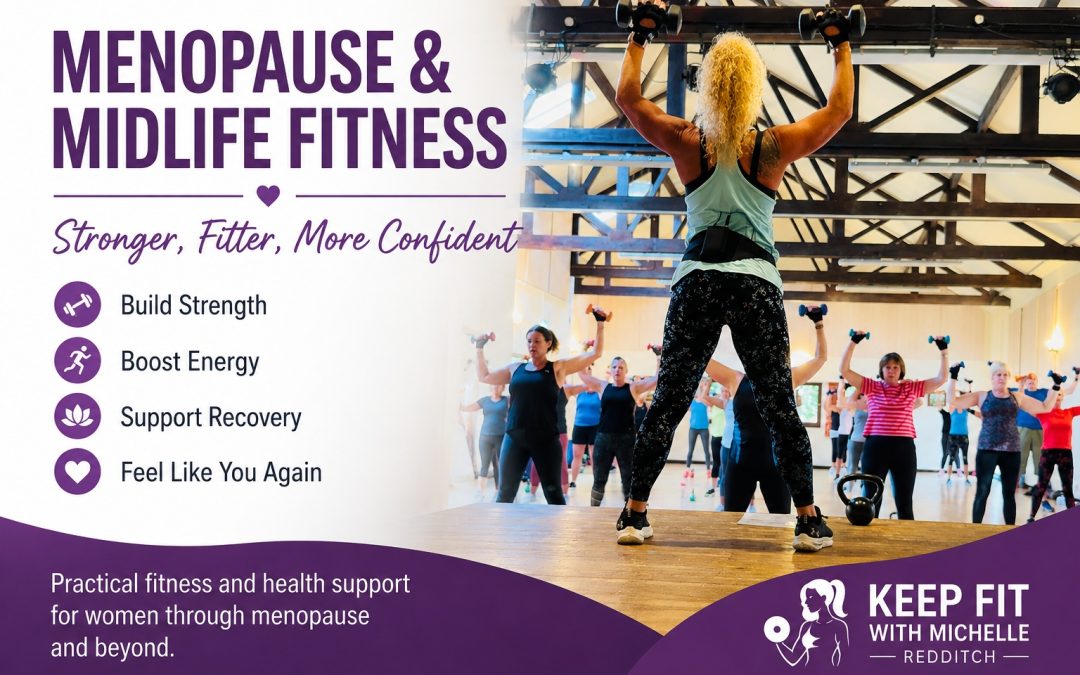
Even 2–3 sessions per week can help:
- maintain lean muscle
- improve metabolism
- reduce body fat
- strengthen bones
- improve posture
- increase energy
For many women, strength training also improves confidence and mental wellbeing.
At Keep Fit with Michelle, I focus on realistic training approaches that fit around busy lives and changing energy levels.
Recovery Matters More Than Ever
Recovery is often overlooked during midlife fitness.
Poor sleep, stress, and hormonal changes can all affect your ability to recover properly from exercise.
That means:
- constantly pushing harder is not always better
- rest days are important
- walking and mobility work matter
- nutrition becomes increasingly important
Signs you may need better recovery include:
- constant fatigue
- joint aches
- poor sleep
- low motivation
- stalled fat loss
- feeling sore all the time
Sometimes, improving recovery produces better results than adding more workouts.
Nutrition for Menopause Fat Loss
Menopause is not just about calories.
Protein intake becomes especially important because it helps preserve muscle mass during hormonal changes.
Many women also benefit from:
- eating more whole foods
- improving fibre intake
- reducing ultra-processed foods
- balancing meals properly
- avoiding crash diets
The goal should be sustainable habits — not extreme restrictions.
What About GLP-1 Medications and Peptides?
There’s growing interest in weight-loss medications and peptides during menopause.
While some women do use these tools successfully, they are not magic solutions.
One major concern is muscle loss during rapid weight reduction.
This is why resistance training and adequate protein are essential alongside any fat-loss approach.
At Keep Fit with Michelle, I believe education and sustainable habits matter far more than quick fixes.
The Best Exercise Plan for Women Over 40
A balanced approach usually works best:
- strength training
- walking
- mobility work
- proper recovery
- balanced nutrition
- consistency over perfection
You do not need:
- punishing workouts
- two-hour gym sessions
- extreme diets
- fitness trends from social media
You need a plan that works with your body — not against it.
Menopause Fitness in Redditch
If you’re based in or around Redditch and struggling with motivation, confidence, or midlife weight gain, you’re definitely not alone.
Many women simply need:
- guidance
- accountability
- realistic structure
- support without judgement
Fitness during menopause should help you feel stronger, healthier, and more confident — not exhausted and discouraged.
Final Thoughts
Menopause changes the body, but it does not end your ability to become fitter, stronger, and healthier.
The key is adapting your approach:
- prioritise strength training
- support recovery
- focus on muscle preservation
- avoid extreme dieting
- stay consistent
Small sustainable changes nearly always outperform short-term extremes.
If you’d like support with menopause fitness, beginner strength training, or sustainable fat loss in Redditch, Keep Fit with Michelle offers supportive coaching designed for real women and real lifestyles.
Info: www.keepfitwithmichelle.co.uk
Book Here: https://gymcatch.com/app/provider/1872
