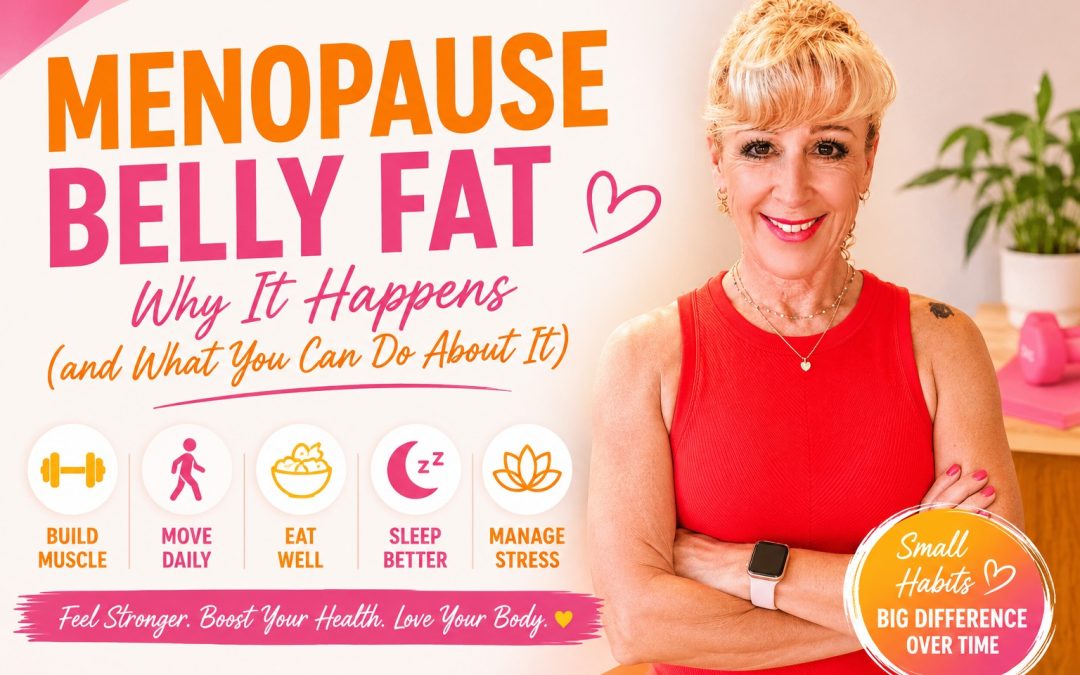
Have you noticed that your waistline seems to have expanded during menopause, even though your eating habits haven’t changed much?
If so, you’re certainly not alone.
One of the most common concerns women have during perimenopause and menopause is the sudden increase in weight around the middle. It can feel frustrating when clothes become tighter, your body shape changes, and the things that worked in your 30s and 40s no longer seem to have the same effect.
The good news is that this isn’t simply about eating too much or exercising too little. Menopause brings hormonal and physical changes that affect the way your body stores fat, builds muscle and uses energy. Understanding what’s happening can help you work with your body instead of against it.
Why does menopause cause belly fat?
Falling oestrogen levels
One of the biggest changes during menopause is the decline in oestrogen.
Before menopause, women tend to store more body fat around the hips and thighs. As oestrogen levels fall, the body naturally begins storing more fat around the abdomen instead.
This change in fat distribution is completely normal, although it can be frustrating. It also means that even if your weight hasn’t changed dramatically, your body shape may have.
Loss of muscle mass
From around the age of 40, we naturally begin to lose muscle—a process known as sarcopenia. During menopause, this muscle loss can happen more quickly due to hormonal changes.
Why does this matter?
Muscle burns more energy than fat, even when you’re resting. As muscle mass decreases, your metabolism slows slightly, making it easier to gain weight and harder to lose it.
This is one of the reasons why strength training becomes so important during midlife.
Increased insulin resistance
Hormonal changes can also affect how your body responds to insulin.
When insulin becomes less effective, it’s harder for your body to regulate blood sugar levels. This can lead to:
- Greater fat storage
- Increased cravings for sugary foods
- Energy highs and lows
- More difficulty managing weight
Eating balanced meals with plenty of protein and fibre can help support healthy blood sugar levels.
Stress and higher cortisol levels
Midlife can often be one of the busiest and most demanding stages of life.
Many women are juggling careers, caring for children or ageing parents, coping with poor sleep, and dealing with menopausal symptoms such as hot flushes and night sweats.
All of these can increase cortisol, often referred to as the body’s stress hormone.
While cortisol itself isn’t “bad”—it’s essential for many bodily functions—chronically high levels have been linked with increased fat storage around the abdomen, particularly visceral fat, which surrounds the internal organs.
Finding ways to manage stress isn’t just good for your mental wellbeing—it can also support your physical health.
Poor sleep
Sleep often becomes more disrupted during menopause, whether due to night sweats, anxiety or simply waking more frequently.
Unfortunately, poor sleep doesn’t just leave you feeling tired.
Research shows that inadequate sleep can:
- Increase hunger hormones
- Reduce feelings of fullness
- Increase cravings for high-calorie foods
- Lower motivation to exercise
- Make weight management more difficult
Prioritising good sleep where possible is one of the most effective things you can do for your overall health.
Moving less without realising
Many women don’t stop exercising during menopause, but daily movement often decreases without them noticing.
Perhaps you’re sitting more at work, taking fewer walks, or simply feeling more tired than you used to.
These small changes in activity can gradually reduce the number of calories you burn each day, making weight gain more likely over time.
The good news is that it doesn’t require hours in the gym to make a difference. Simply walking more and staying active throughout the day can have a positive impact.
What can you do about it?
Although menopausal weight gain is common, it certainly isn’t inevitable.
Small, consistent habits often make the biggest difference.
Lift weights or do resistance training
Strength training is one of the most beneficial forms of exercise during and after menopause.
It helps you:
- Maintain and build muscle
- Support your metabolism
- Improve bone strength
- Boost balance and mobility
- Increase confidence in everyday activities
Aim for two or three sessions each week if you can.
Eat enough protein
Protein becomes increasingly important as we age because it helps preserve muscle mass.
Many active women over 40 benefit from around 1.2–1.6g of protein per kilogram of body weight each day, although individual requirements vary.
Good sources include:
- Lean meat
- Fish
- Eggs
- Greek yoghurt
- Cottage cheese
- Beans and lentils
- Tofu
Walk every day
Walking is simple, free and incredibly effective.
Regular walking supports heart health, helps manage weight, improves mood and complements strength training beautifully.
Every step counts.
Prioritise sleep
You may not always be able to control your sleep, but developing a relaxing bedtime routine, limiting caffeine later in the day and creating a cool sleeping environment can all help.
Better sleep supports hormones, energy levels and appetite regulation.
Manage stress
You don’t have to eliminate stress completely, but finding healthy ways to manage it can make a real difference.
Activities such as:
- Pilates
- Yoga
- Walking outdoors
- Mindfulness
- Deep breathing
- Spending time with friends can all help lower stress levels and improve wellbeing.
Choose nourishing foods
Rather than focusing on restrictive diets, think about adding more nutritious foods to your meals.
Aim to include:
- Plenty of vegetables
- Fruit
- Wholegrains
- Fibre-rich foods
- Lean protein
- Healthy fats
These foods help you feel fuller, provide sustained energy and support overall health.
Avoid crash diets
When you’re trying to lose weight, it can be tempting to cut calories dramatically.
Unfortunately, restrictive diets often lead to muscle loss, which slows metabolism even further.
Instead, focus on building healthy habits you can maintain for life.
It’s about much more than the number on the scales
The goal during menopause isn’t simply to weigh less.
It’s to:
- Build and maintain muscle
- Reduce body fat
- Protect your bones
- Improve balance and mobility
- Boost energy
- Stay strong and independent for years to come
For many women, a combination of strength training, walking and Pilates provides an excellent foundation for lifelong health.
Final thoughts
Menopause is a natural stage of life—not a personal failing.
Yes, your body changes, but those changes don’t mean you have to accept feeling weaker, less energetic or less confident.
By understanding what’s happening inside your body and focusing on simple, sustainable habits, you can support your health and feel stronger than ever.
Remember, it’s the small things you do consistently—not the occasional burst of perfection—that create lasting results.
Need some support?
At Keep Fit With Michelle, I help women over 40 improve their strength, fitness and confidence through fun, supportive exercise classes designed for midlife and beyond.
Whether you’re new to exercise or looking to build on your fitness, I’d love to help you feel stronger, healthier and happier.
Because it’s never too late to invest in your health 💜
Get in touch
Email: michelle@keepfitwithmichelle.co.uk
Message/ Whatsapp: 07966 202796
https://keepfitwithmichelle.co.uk/
Pilates and Women’s Strength Classes in Redditch

Keep Fit With Michelle
Your Strength. Your Journey. Your Time.