If you’re dealing with sciatica, you’ll know how uncomfortable—and sometimes frustrating—it can be. Pain, tingling, or tightness travelling from the lower back into the leg can make even everyday movements feel challenging.
The good news? The right kind of movement can help.
At my Pilates classes in Redditch, I often support people managing mild or recovering sciatica by focusing on gentle, controlled exercises that improve strength, mobility, and posture—without aggravating symptoms.
In this guide, you’ll learn:
- What sciatica is (in simple terms)
- How Pilates can help relieve symptoms
- A safe, 5-minute daily routine you can do at home
What Is Sciatica?
Sciatica happens when the sciatic nerve—running from your lower back down through your leg—becomes irritated or compressed.
This can lead to:
- Lower back or leg pain
- Tingling or “pins and needles”
- Tightness in the hips or glutes
- Weakness in the leg
It’s more common than you might think, and it often responds well to gentle, consistent movement.
Why Pilates Helps Sciatica
Pilates is one of the most effective and safe forms of exercise for supporting spinal health.
In my Redditch Pilates classes, we focus on:
- Core strength → supports and protects the spine
- Posture improvement → reduces strain on the lower back
- Mobility and flexibility → eases tight muscles around the hips and legs
- Controlled movement → helps you move safely and confidently
Unlike high-impact workouts, Pilates is low-impact and adaptable, making it ideal if you’re managing discomfort or returning from injury.
5-Minute Daily Routine for Sciatic Relief
This short routine is perfect to do at home or between classes. It’s gentle, effective, and designed to ease tension without overloading your body.
Pelvic Tilts (1 minute)
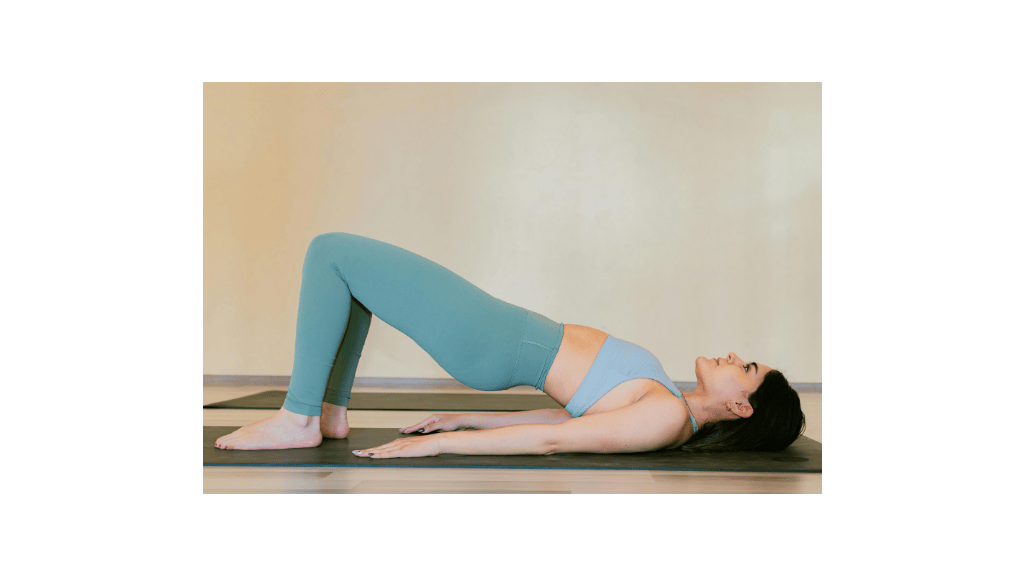
Gently lift your pelvis to flatten your lower back into the floor, then release.
Benefits:
- Activates deep core muscles
- Reduces stiffness in the lower back
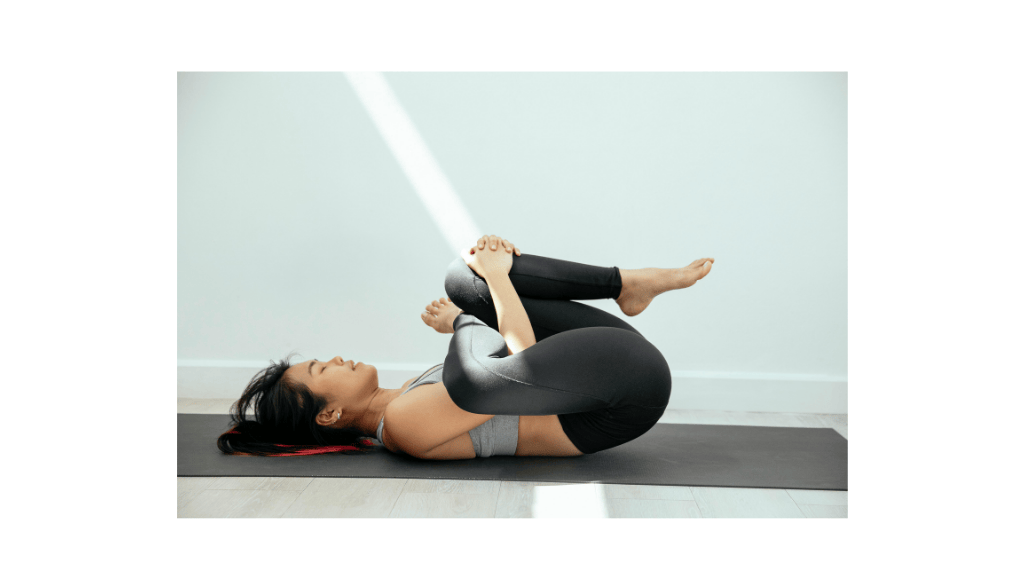
Knee-to-Chest (1 minute)
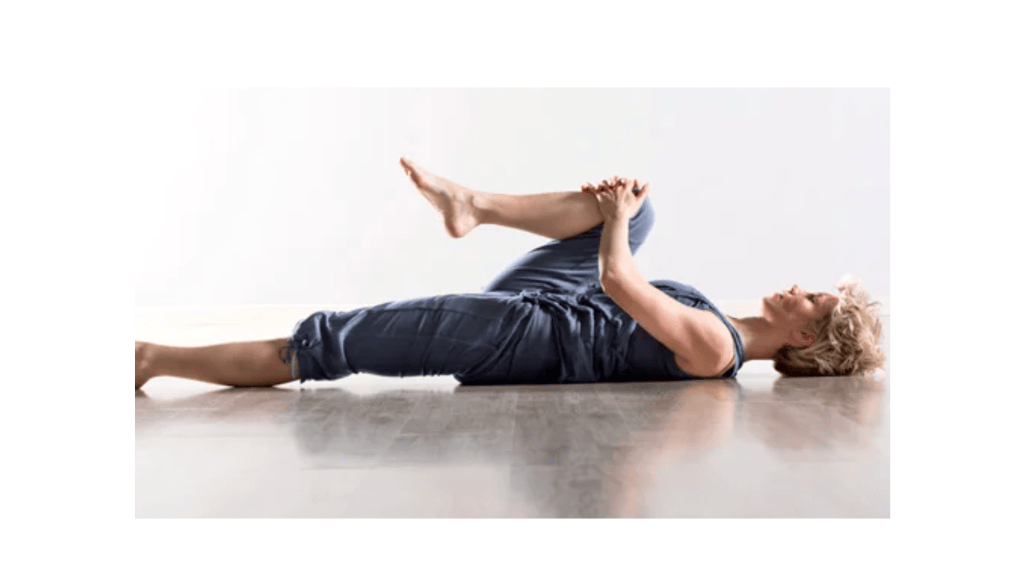
Bring one knee towards your chest, alternating sides.
Benefits:
- Relieves pressure in the lower back
- Gently stretches surrounding muscles
Figure 4 Stretch (1 minute)
Cross one ankle over the opposite knee and gently draw the leg in.
Benefits:
- Releases tension in the glutes
- Helps reduce pressure on the sciatic nerve
Hamstring Stretch (1 minute)
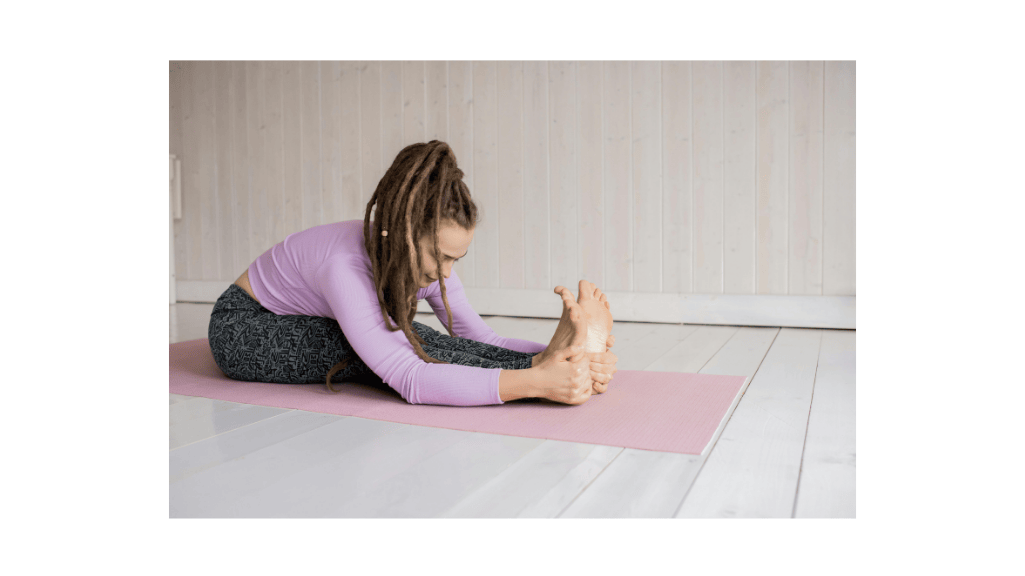
Lean forward towards toes and hold (or use a towel to hold on to under feet).
Benefits:
- Improves flexibility in the back of the leg
- Reduces pulling on the lower back
Child’s Pose (1 minute)
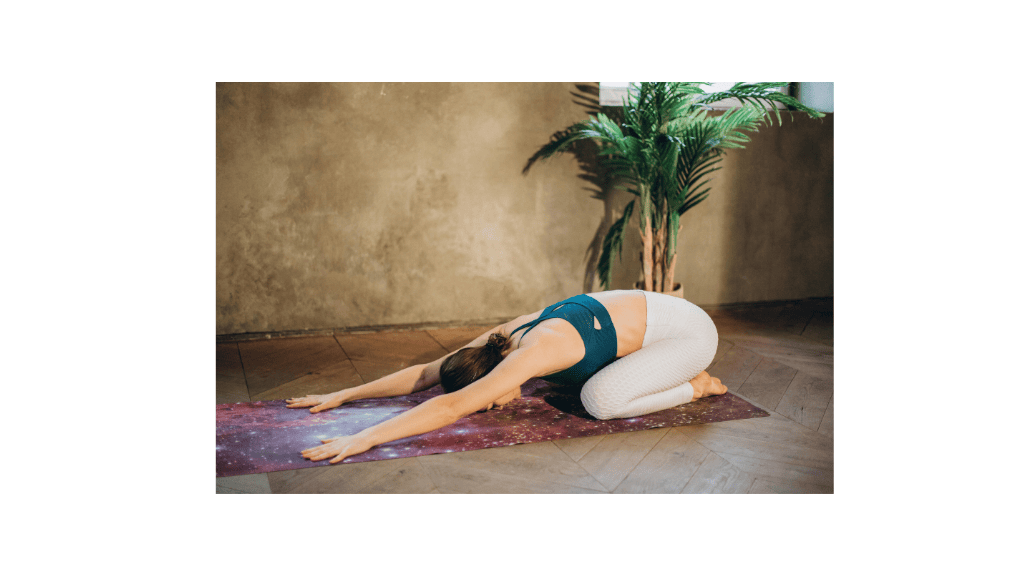
Sit back into a comfortable resting position and focus on slow breathing.
Benefits:
- Encourages relaxation
- Gently stretches the lower back
Important Tips for Sciatica
- ✔️ Keep all movement pain-free
- ✔️ Move slowly and with control
- ✔️ Breathe throughout
- ✔️ Stop any exercise that worsens symptoms
👉 If it feels better after, you’re on the right track.
🌟 Final Thoughts
Sciatica can feel limiting—but with the right approach, you can start to feel more in control again.
A few minutes of gentle movement each day, combined with regular Pilates, can make a real difference over time.
Consistency beats intensity—every time.
Join My Pilates Classes in Redditch
If you’re looking for Pilates in Redditch for back pain, sciatica, or general wellbeing, my classes are designed to be supportive, friendly, and suitable for all levels. https://keepfitwithmichelle.co.uk/classes/pilates/
We focus on:
- Warm, welcoming classes
- Clear guidance and modifications
- Building strength safely and progressively
Whether you’re new to Pilates or returning after injury, you’ll be supported every step of the way.
Class Info: www.keepfitwithmichelle.co.uk
Class Booking: https://gymcatch.com/app/provider/1872
